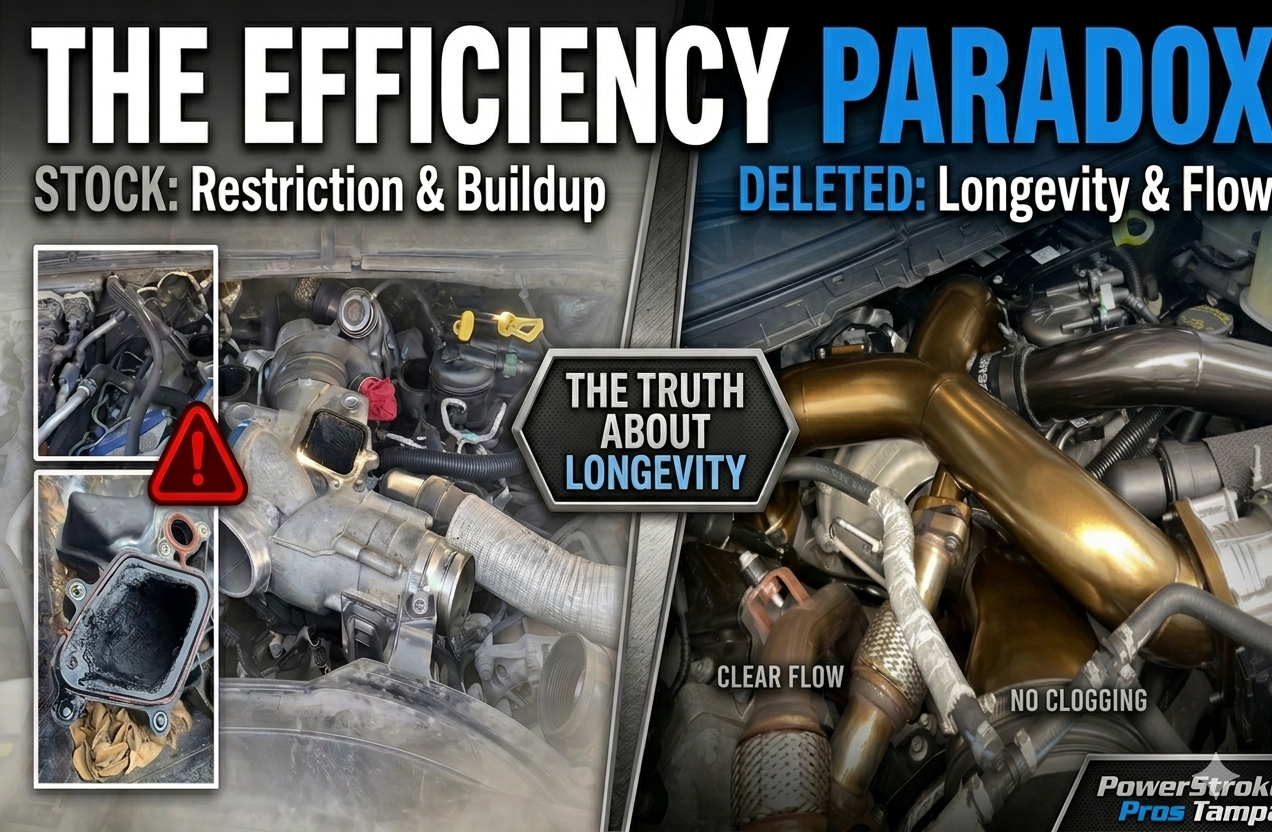
The Truth About Diesel Emissions and Efficiency: Why Longevity is the Ultimate Green Metric
The Efficiency Paradox: Is the "Greenest" Truck the One That Lasts 500k Miles?
In the world of Ford 6.7L repair, there is a massive disconnect between factory compliance and mechanical reality. While emissions systems are designed for air quality, the unintended consequences—soot-clogged intakes, fuel-diluted oil, and premature engine failure—create a cycle of industrial waste that is hard to ignore. At PowerStroke Pros, we’re pulling back the curtain on the "Efficiency Paradox." From a professional engineering standpoint, we explore why a breathable, long-lasting motor might actually be the most sustainable choice for the planet.
Discover why real-world longevity is the ultimate green metric and see the internal evidence of why "cleaner" isn't always better for the life of your truck.
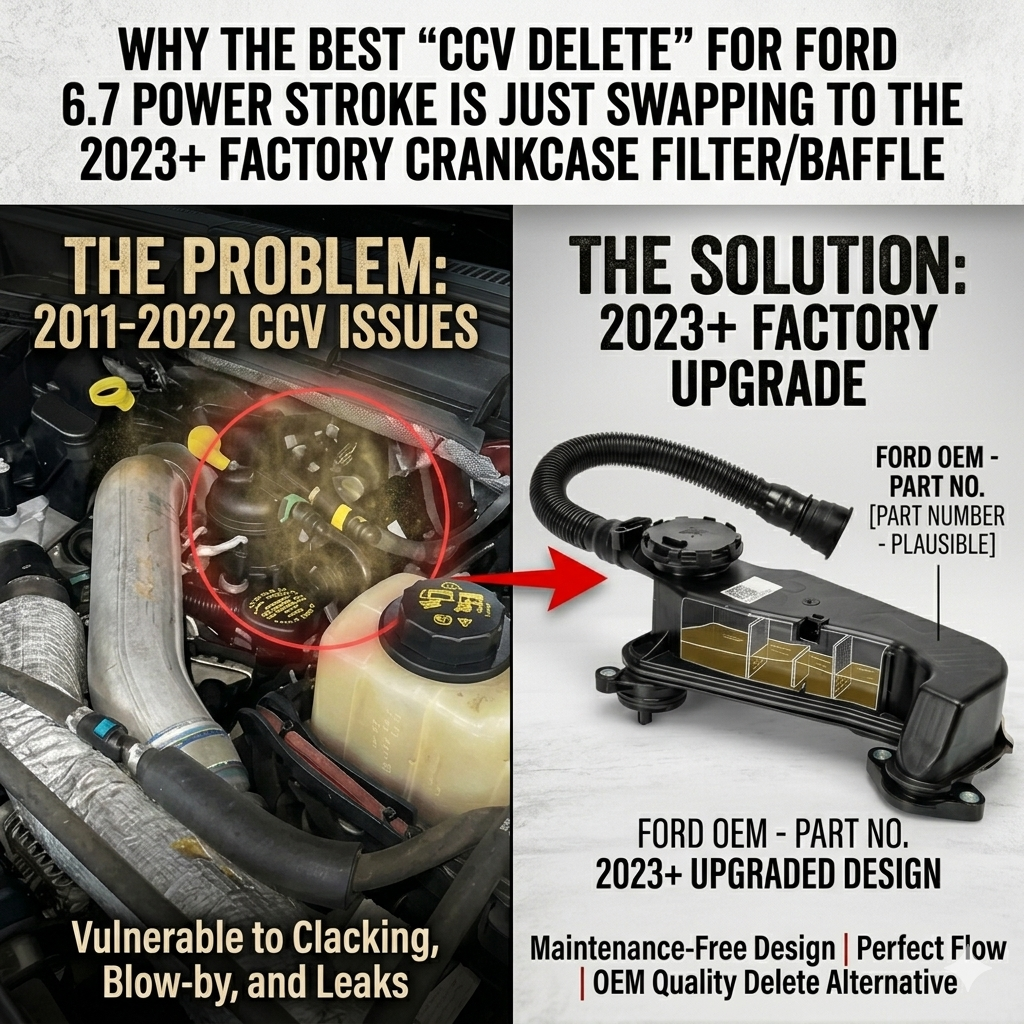
Why the Best “CCV Delete” for Ford 6.7 Power Stroke Is Just Swapping to the 2023+ Factory Crankcase Filter/Baffle
Most 6.7 Power Stroke owners chasing a CCV delete end up fighting the very system Ford engineered. The 6.7 was designed to run on slight negative crankcase pressure for better sealing and longevity. Instead of venting to atmosphere or adding bulky catch cans, the smartest upgrade is surprisingly simple: replacing the old clog-prone CCV with the updated 2023+ factory baffle-style crankcase filter.
This OEM solution keeps the closed system intact, maintains proper vacuum, dramatically reduces restriction, and helps prevent oil pan leaks and turbo oiling issues — all without the downsides of traditional deletes.
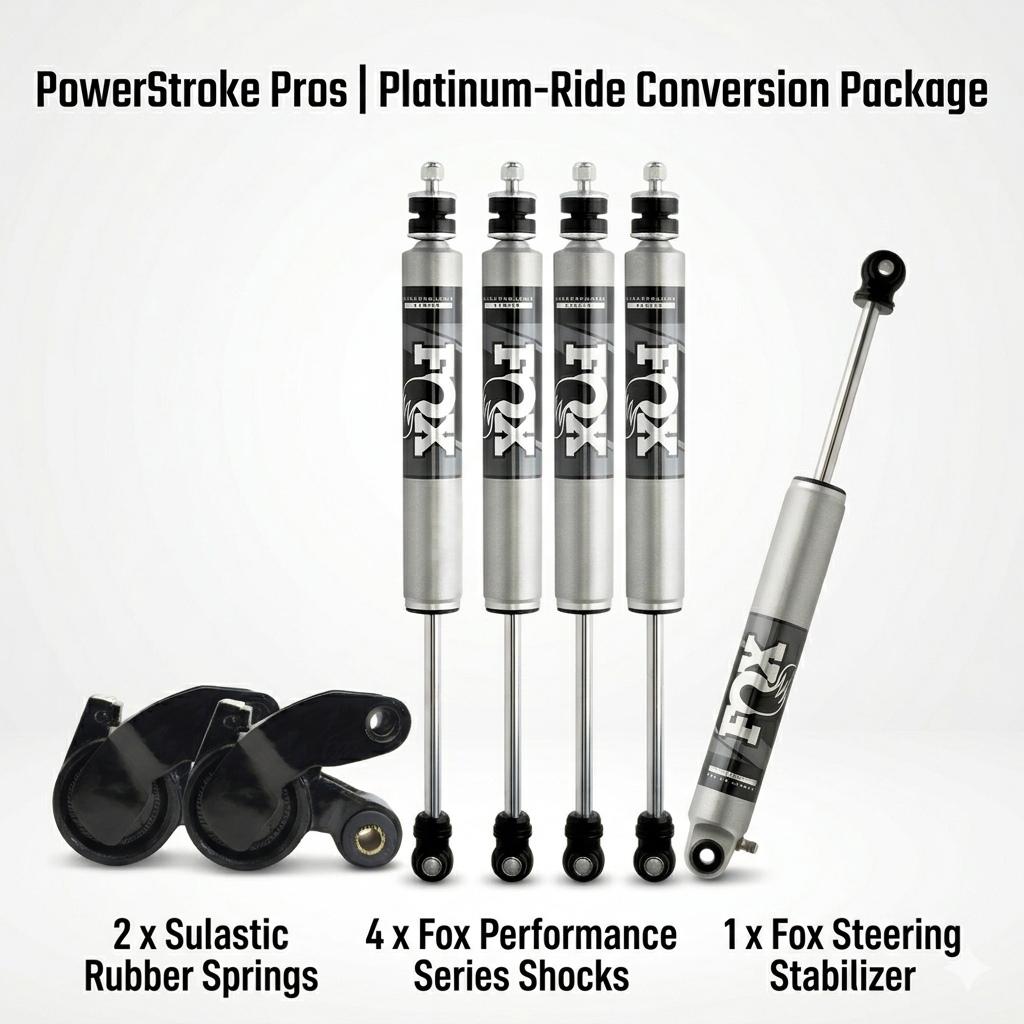
Why Your Super Duty RIdes Like a Tank ( And How to Fix the “Tampa Jitter”)
Most PowerStroke owners believe a bone-jarring ride is just "part of owning a truck." Whether you're navigating the bridge expansion joints on I-75 or commuting through Tampa traffic, the factory suspension often feels oversprung and unrefined. At PowerStroke Pros, we’ve cracked the code on achieving luxury-level comfort in a heavy-duty chassis. From progressive damping to vibration isolation, here is how we re-engineer the Ford Super Duty to ride like a premium SUV while keeping its legendary workhorse DNA intact.
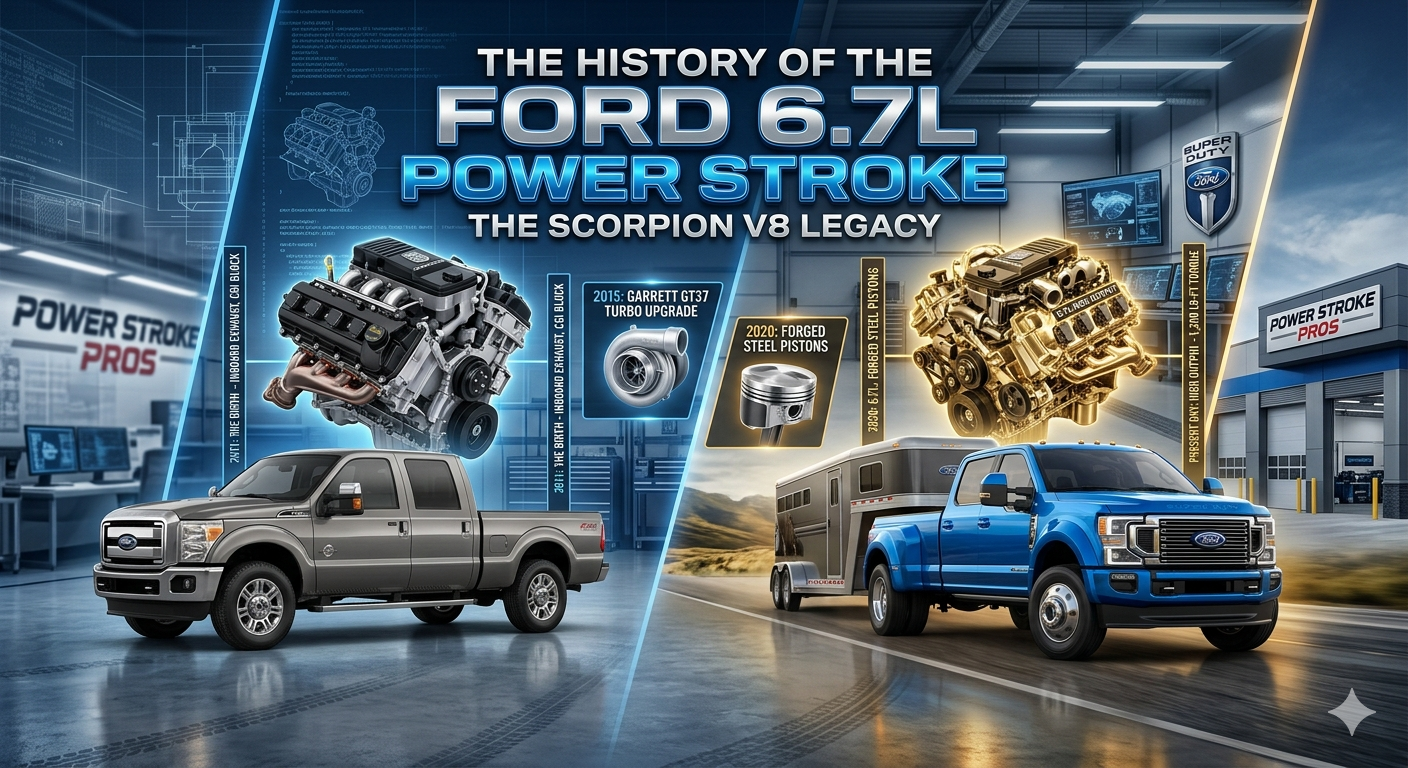
History Of the Ford “Scorpion” 6.7L Power Stroke
In 2011, Ford did the unthinkable: they cut ties with their long-time engine partner and designed a diesel entirely in-house. The result was the 'Scorpion' 6.7L Power Stroke—a radical, reverse-flow V8 that would go on to redefine modern heavy-duty performance. But the journey from the first 2011 models to today’s 1,200 lb-ft torque High Output legend wasn’t without its hurdles. From the introduction of forged steel pistons to the game-changing 10-speed transmission, we’re breaking down the evolution of the engine that saved the Super Duty and cemented Ford’s dominance in the torque wars.
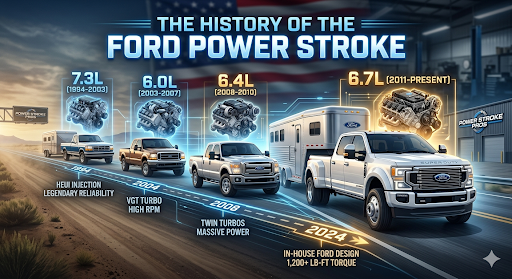
History of the Ford Power Stroke: Generations at a Glance
Since 1994, the Power Stroke name has been synonymous with heavy-duty performance and American grit. But the road from the million-mile 7.3L to today’s 1,200 lb-ft torque monster, the 6.7L, hasn’t always been smooth. Whether you’re a fan of the 'bulletproofed' 6.0L or the high-tech 'Scorpion' V8, every generation of the Power Stroke has a story to tell. Join the experts at Power Stroke Pros as we dive into the engines that built the Super Duty legacy, the innovations that changed the industry, and the common pitfalls that every owner should know.
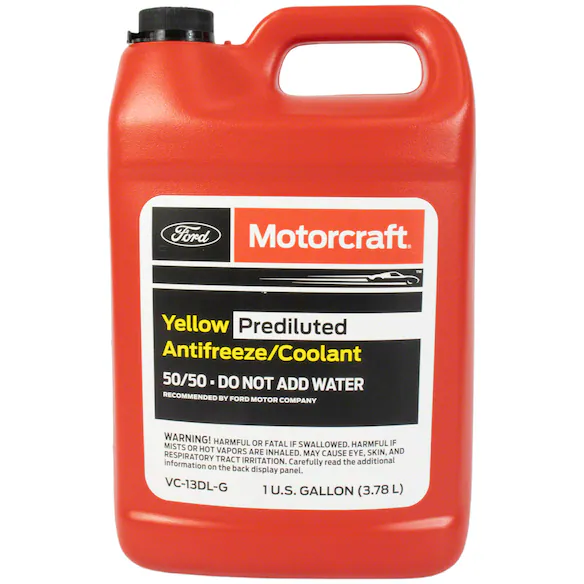
🚨 6.7 Powerstroke Owners – Stop Using the Wrong Coolant! 🚨
Discover why Motorcraft Yellow (VC-13-G) is the only coolant you should run in your 2020+ 6.7 Powerstroke. Specifically engineered for aluminum components, it outperforms green, orange, Peak, Prestone, Zerex, and universal coolants in independent testing and real-world use with superior corrosion protection, heat transfer, and longevity—preventing costly EGR cooler and water pump failures.”